Proudly serving Phoenix, Mesa, Scottsdale, Chandler, Glendale, Peoria & surrounding areasCall or Text 24/7: +1 (480) 210-2595

Air Duct Cleaning, Sanitizing, and HVAC Sealing Services in Paradise Valley, Arizona

Phoenix Duct Cleaners provides air duct cleaning throughout Paradise Valley, Arizona, for estate homes, resort-adjacent properties, custom residences, and commercial spaces. Our services include air duct cleaning, dryer vent cleaning, residential and commercial duct cleaning, HVAC duct cleaning, duct sealing, Aeroseal duct sealing, vent cleaning, sanitizing and deodorizing, and air duct repair. We work throughout the town, including properties near Camelback Mountain, Mummy Mountain, Tatum Boulevard, and Mockingbird Lane. Each visit is tailored to the property's duct layout, HVAC zones, and access conditions.

Sonoran Desert dust, seasonal pollen, and fine particulate enter return ducts as HVAC systems cycle through much of the year. Large lots and multi-wing homes can have longer duct runs, complex attic access, and multiple zones that make superficial vacuuming inadequate. We use source-removal methods built around NADCA standards, HEPA-filtered negative-air equipment, and branch-by-branch agitation. Before-and-after photos document what was removed so owners and property managers can review the work.

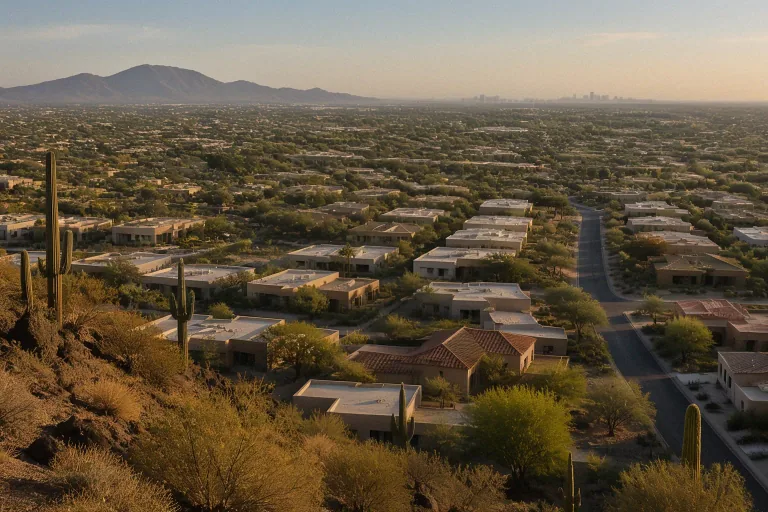
Paradise Valley sits between Phoenix and Scottsdale and had roughly 12,658 residents in the 2020 census, with low-density homes, golf courses, and resort properties shaping local service needs.

5-star rating4.9/5 Average Rating - 20+ Years of Experience - Paradise Valley Air Duct Cleaning Specialists - Residential & Commercial
Duct Cleaning Services

Air Duct & Vent Services in Paradise Valley, AZ

From source removal to sealing and repair, choose the service that matches the condition of your duct system. For properties spanning Paradise Valley and nearby Phoenix, the same inspection-led approach helps determine whether cleaning, sealing, sanitizing, or repair is appropriate.

Air Duct Cleaning

Air duct cleaning equipment in an unfinished basement with exposed metal trunk lines in Paradise Valley, AZ.

HEPA-filtered negative-air machines and rotary-brush agitation remove accumulated dust, debris, and allergen buildup from supply and return ductwork. We clean each branch line individually instead of stopping at the main trunk.

Explore Service

Dryer Vent Cleaning

Dryer vent cleaning showing lint debris in a vent pipe at a home in Paradise Valley, AZ.

Lint buildup inside a dryer vent is a residential fire risk, especially when larger properties require a long route to the exterior. We clear the path from the dryer connection to the termination point and check for crushed sections or improper transitions that restrict airflow.

Explore Service

Residential Air Duct Cleaning

Air duct cleaning of a floor register and interior duct boot in a home in Paradise Valley, AZ.

HVAC duct cleaning covers more than the branch lines: we inspect the air-handler cabinet, blower wheel, and accessible coil surfaces for buildup that can restrict airflow. Cleaning these components helps address the dust that can make equipment run longer cycles.

Explore Service

Commercial Air Duct Cleaning

Galvanized steel ductwork being cleaned by a vacuum hose in a commercial space in Paradise Valley, AZ.

Residential work ranges from single-story ranch homes to sprawling multi-wing estates. Our crews clean supply registers, return grilles, and connecting runs throughout the home, including areas that require more deliberate access.

HVAC Duct Cleaning

Industrial vacuum hose cleaning dusty HVAC ducts in an attic in Paradise Valley, AZ.

Commercial duct cleaning is planned around operating hours and the documentation needs of the property. We adapt the cleaning sequence for offices, retail spaces, resort common areas, medical offices, restaurant kitchens, and other light-commercial environments.

Duct Sealing

Fresh metallic sealant on insulated attic ductwork in a Paradise Valley, AZ home.

A video duct inspection shows the actual condition of accessible supply and return runs before a service plan is recommended. Thermal imaging can also help evaluate suspected leak points or insulation gaps without relying on guesswork.

Aeroseal Duct Sealing

Aeroseal duct sealing equipment and insulated tubing inside an attic in Paradise Valley, AZ.

After mechanical cleaning, EPA-registered antimicrobial treatments rated for HVAC use can address bacteria, mold spores, and virus particles when biological growth or odor is present. Sanitizing is especially relevant after moisture intrusion, a musty odor complaint, or a home purchase with an unknown duct history.

Vent Cleaning

Air duct cleaning of a floor register on a travertine floor in a home in Paradise Valley, AZ.

Vent cleaning addresses the registers, grilles, and connecting passages where loose dust and debris collect near occupied rooms. Cleaning these accessible endpoints complements branch-line source removal instead of merely wiping the visible surfaces.

Air Duct Sanitizing & Deodorizing

Technician sanitizing flexible insulated air ducts in an attic in Paradise Valley, AZ.

Fine desert particulate, seasonal pollen, and pet dander can recirculate whenever the HVAC system runs. Cleaning contaminated duct surfaces helps reduce the reservoir of irritants inside homes that keep windows closed to preserve cooling efficiency.

Air Duct Repair

Patched galvanized steel air duct with silver sealant tape between open floor joists in a Paradise Valley, AZ basement.

Maintenance planning starts with the system's actual condition rather than a fixed recommendation based only on age. Video findings, recent construction, pets, occupancy sensitivities, and operating demands help determine when another cleaning or inspection is appropriate.

Choosing the Right Service

How to Choose the Right Duct Service in Paradise Valley

The right service depends on whether the system contains debris, has airflow restrictions, leaks conditioned air, carries odors, or includes damaged sections. An inspection-led recommendation separates problems that call for cleaning from those better handled by sealing, sanitizing, dryer-vent service, or repair.

Video-First Inspection

Camera footage of accessible duct runs provides direct evidence of buildup, damage, and access conditions before work is recommended.

Source-Removal Cleaning

Choose a method that creates negative pressure and mechanically agitates embedded debris instead of vacuuming only the visible register openings.

Full-System Scope

A complete plan accounts for supply runs, return runs, registers, the air-handler cabinet, the blower wheel, and accessible coil surfaces.

Clear Photo Documentation

Before-and-after images make it easier to verify what the crew found, what was removed, and which conditions may need follow-up.

Complex Property Access

Multi-zone estates, long attic runs, crawlspaces, and custom soffits require equipment and access methods suited to the actual property configuration.

Standards-Based Work

Our process follows NADCA standards and uses source-removal methods designed to capture loosened debris through HEPA-filtered negative-air equipment.

Paradise Valley Duct Issues

Common Duct Problems in Paradise Valley Properties

Dry desert conditions, heavy cooling demand, long duct routes, and seasonal moisture can create several different problems inside one HVAC system. Maricopa County sees elevated particulate during dust-storm season, while Arizona Department of Environmental Quality high-pollution advisories can reflect regional dust and ozone conditions.

Request Duct Inspection

Desert Dust Buildup

Air conditioning that runs heavily for nine to ten months a year repeatedly pulls fine desert dust into returns and branch lines. Accumulation can be especially visible around registers after dust storms or renovation work.

Pollen & Pet Dander

Properties near golf courses, resort landscaping, and large yards can draw pollen and fertilizer particulate into return vents. Pet dander adds another source of debris in homes where the windows stay closed for cooling efficiency.

Restricted HVAC Airflow

Dust caked on a blower wheel or accessible coil surface can restrict airflow and lengthen operating cycles. A full-system inspection helps distinguish component buildup from a blockage elsewhere in the duct network.

Monsoon Moisture Intrusion

Monsoon season runs roughly June through September and brings humidity spikes that can support mold growth wherever leaks have introduced moisture. Musty odors or visible biological growth call for mechanical cleaning before an HVAC-rated sanitizing treatment.

Leaking or Damaged Ducts

Disconnected joints, crushed flex duct, rodent damage, and poorly sealed seams can lose conditioned air into attics or wall cavities. Inspection determines whether a localized repair, manual sealing, or interior Aeroseal treatment fits the problem.

Long Dryer Vent Runs

Larger homes often route dryer vents farther before they reach an exterior termination. Lint, crushed transitions, and improper connections along that path can restrict airflow and increase fire risk.

Why Choose Us

Why Choose Phoenix Duct Cleaners in Paradise Valley?

Paradise Valley properties often combine custom construction, long duct runs, multiple HVAC zones, and limited attic access. Our local experience, documented inspection process, and clear service scope help owners understand what the system needs before work begins.

Paradise Valley Property Experience

Our crews have worked near the resort corridor and Mummy Mountain, where estates often contain multi-zone equipment, custom soffits, and longer-than-average duct routes. We adjust access and cleaning methods to those conditions.

Licensed & Covered Service

As a licensed duct cleaning provider, Phoenix Duct Cleaners carries general liability coverage and follows Arizona Registrar of Contractors guidelines for HVAC-adjacent work. That level of care matters around six- or seven-figure HVAC investments.

Clear Quotes & Documentation

We provide a clear quote after a walkthrough or video inspection so the scope is defined before work begins. Final photos document before-and-after conditions and flag any repair, sealing, or coil concerns discovered along the way.

Our Cleaning Process

Our Air Duct Cleaning Process in Paradise Valley

Each job moves from evidence to containment, source removal, component cleaning, and final verification. Equipment and access methods are adjusted for attic, crawlspace, basement, slab-on-grade, and multi-zone configurations.

01.

Inspect the Duct System

We begin with video inspection of accessible supply and return runs. Thermal imaging may be added when the concern involves a suspected leak point or insulation gap.

02.

Prepare & Seal Registers

The crew protects the work area and seals all registers except one connection point for the negative-air machine, creating controlled airflow through the system.

03.

Create HEPA-Filtered Negative Pressure

A HEPA-filtered vacuum extraction unit places the duct network under negative pressure so dislodged material is pulled toward collection instead of released into occupied rooms.

04.

Agitate Each Duct Run

Rotary brushes or compressed-air whips loosen embedded dust and debris throughout individual branch lines while the negative-air machine captures the material.

05.

Clean Air-Handler Components

The process covers the air-handler cabinet, blower wheel, and accessible coil surfaces. When biological growth or odor is present, an HVAC-rated sanitizing treatment may follow mechanical cleaning.

06.

Verify & Document Results

A final inspection checks the cleaned system and records before-and-after conditions with photos. Any remaining damage, leakage, or access limitation is explained before follow-up work is considered.

Service Outcomes

What Thorough Duct Service Can Address

Case Study 1: Dust and debris removal: Branch-by-branch agitation and HEPA-filtered negative pressure target buildup in both supply and return runs, not just the visible register openings.

Case Study 2: Airflow and leakage concerns: Cleaning the blower wheel and accessible coil surfaces, repairing damaged sections, and sealing leaks address different causes of lost airflow or conditioned-air waste.

Case Study 3: Odor and biological concerns: Mechanical source removal can be followed by HVAC-rated sanitizing or deodorizing when moisture, smoke residue, pet odors, or biological growth are present.

Schedule Service

Request an Air Duct
Cleaning
Estimate

Tell us about visible dust, odors, airflow changes, recent renovation work, or a dryer vent that is taking longer to clear moisture. We can inspect the system, explain the appropriate scope, and provide a clear quote before work begins.

Duct Cleaning Help

FAQs About Air Duct Cleaning in Paradise Valley, AZ

These answers cover cleaning frequency, pricing, inspection, sanitizing, sealing, dryer vents, commercial service, and local property conditions.

Call Our Duct Cleaning Team

For homes with visible dust around registers, recent renovation debris, stale odors, or unexplained indoor irritation, professional cleaning can remove material that keeps recirculating through the HVAC system. Clean ductwork also supports better airflow and reduces avoidable strain caused by heavy buildup. A video inspection is the best way to confirm whether cleaning is warranted.

Most Paradise Valley homes are generally evaluated for cleaning every 3 to 5 years. Homes with pets, recent construction, or occupants with respiratory sensitivities may benefit from more frequent service because dust storms and heavy summer HVAC use accelerate buildup. We base the recommendation on video evidence rather than a one-size-fits-all interval.

Phoenix metro pricing, including Paradise Valley, typically runs between $270 and $500 for a standard residential job, averaging around $389. Common square-foot pricing falls between $0.15 and $0.30 per square foot of conditioned space; a typical Phoenix-area home just under 1,650 square feet often falls in the $250 to $500 range. Larger multi-zone estates can cost more, and labor commonly runs $90 to $125 per hour depending on complexity. A clear quote follows a walkthrough or video inspection.

Sanitizing targets biological contaminants such as bacteria, mold spores, and virus particles after mechanical debris removal. It is most relevant after moisture intrusion, a musty odor complaint, or when the maintenance history is unknown. We use EPA-registered antimicrobial treatments rated for HVAC systems rather than general-purpose disinfectants.

Common signs include dust blowing from registers, visible debris around supply vents, musty or stale odors when the system runs, and increased indoor irritation. Renovation work can also pull drywall dust and construction debris into returns. A video inspection confirms actual duct conditions instead of relying on symptoms alone.

Aeroseal is an interior sealing process that introduces aerosolized sealant into ductwork under controlled pressure. The particles bond to leak edges, including gaps hidden inside walls, above ceilings, or beneath slabs that manual mastic cannot reach. It is considered when inspection shows leakage in inaccessible portions of the system.

The process starts with video inspection, followed by register sealing and HEPA-filtered negative-air extraction. Rotary brushes or compressed-air whips loosen embedded debris in individual runs, and the crew cleans the air-handler cabinet, blower wheel, and accessible coil surfaces. A final inspection and photos document the completed work.

Our HVAC duct cleaning scope includes the air-handler cabinet and blower wheel, along with cleaning accessible coil surfaces. The inspection also flags coil buildup that may be restricting airflow. Access limitations or conditions requiring separate work are documented before a recommendation is made.

Yes. Paradise Valley work includes custom homes with multi-wing layouts, long attic runs, custom soffits, and multiple HVAC zones. Equipment and access methods are adjusted to the property configuration so the plan covers the actual supply and return network.

Cleaning removes contamination, while sealing addresses air escaping through joints, seams, and hidden gaps; repair is used for crushed flex duct, disconnected sections, or rodent damage. Accessible leaks may be treated with mastic and metal-backed HVAC tape, while Aeroseal can reach certain inaccessible gaps. If repair expands into replacement or rerouting, Paradise Valley Building Safety Department requirements under Maricopa County code adoption may come into play.

Lint accumulation restricts airflow and is a documented residential fire risk. Longer vent runs in larger homes are more prone to buildup, crushed sections, and improper transitions. Cleaning should cover the full route from the dryer connection to the exterior termination point.

Odor molecules can cling to dust and residue inside ductwork, so masking the smell does not address the source. Mechanical cleaning removes contaminated buildup before an appropriate deodorizing treatment is considered. The inspection also checks for moisture or other conditions that could be contributing to a musty smell.

Yes. Commercial work can include resort common areas, retail spaces, medical offices, restaurant kitchens, offices, and warehouses. Scheduling can be arranged around business hours, with before-and-after documentation available for property records or inspection needs.

Dust storms increase the fine particulate drawn into return vents as air-conditioning systems cycle. Monsoon humidity can compound the problem when an existing leak introduces moisture into attic or crawlspace ductwork, creating conditions where mold may develop. Inspection helps separate ordinary dry dust from moisture-related contamination.

Coverage includes the full Paradise Valley 85253 area, including the Paradise Valley Country Club corridor and properties along Tatum Boulevard and Mockingbird Lane. The service area also extends to adjacent Scottsdale neighborhoods, Phoenix's Arcadia and Biltmore areas, and communities toward Cave Creek and Carefree. Broader Maricopa County coordination is available for commercial and property-management groups with multiple sites.